Minecraft wall designs: 12 walls to build, from medieval to modern
Twelve Minecraft wall designs to build step by step: medieval, castle, timber frame, cottage, Viking, fantasy, Japanese, desert, modern and an overgrown ruin.
Ideas5 min read
A plain wall of one block is the quickest way to make a base look unfinished. A good wall has depth (posts and pillars standing proud of the face), a top that finishes it (a parapet, a coping or a little roof), a few details at eye level, and light. The twelve designs below all follow those rules, each in its own style, so you can pick the one that fits your build and repeat it along a whole wall.
Every wall here is an original X-Builds design with a full guide: the exact blocks it needs, counted from the build itself, and a picture for every step with the new blocks outlined. Each is one section, so build it once, then copy it along your wall as many times as you need.
What makes a wall look good
Posts every few blocks. Logs or pillars one block forward of the wall break a long face into bays. It is the single biggest difference between a wall and a slab of stone.
Mix the main block. Stone bricks with a few mossy and cracked ones, or cobblestone worked in, read as old and real. See our block palettes guide for mixes from real builds.
Finish the top. Crenellations for a castle, a plank coping for a farm wall, a slab roof for a Japanese one. A wall that just stops looks cut off.
Something at eye level. A window with a flower box, a banner, a shield, a niche: one detail per bay is plenty.
Light it. Lanterns on the posts make a wall glow at night and, in Java Edition 1.18 and later, keep hostile mobs from spawning along it (they spawn only where the block light is 0).
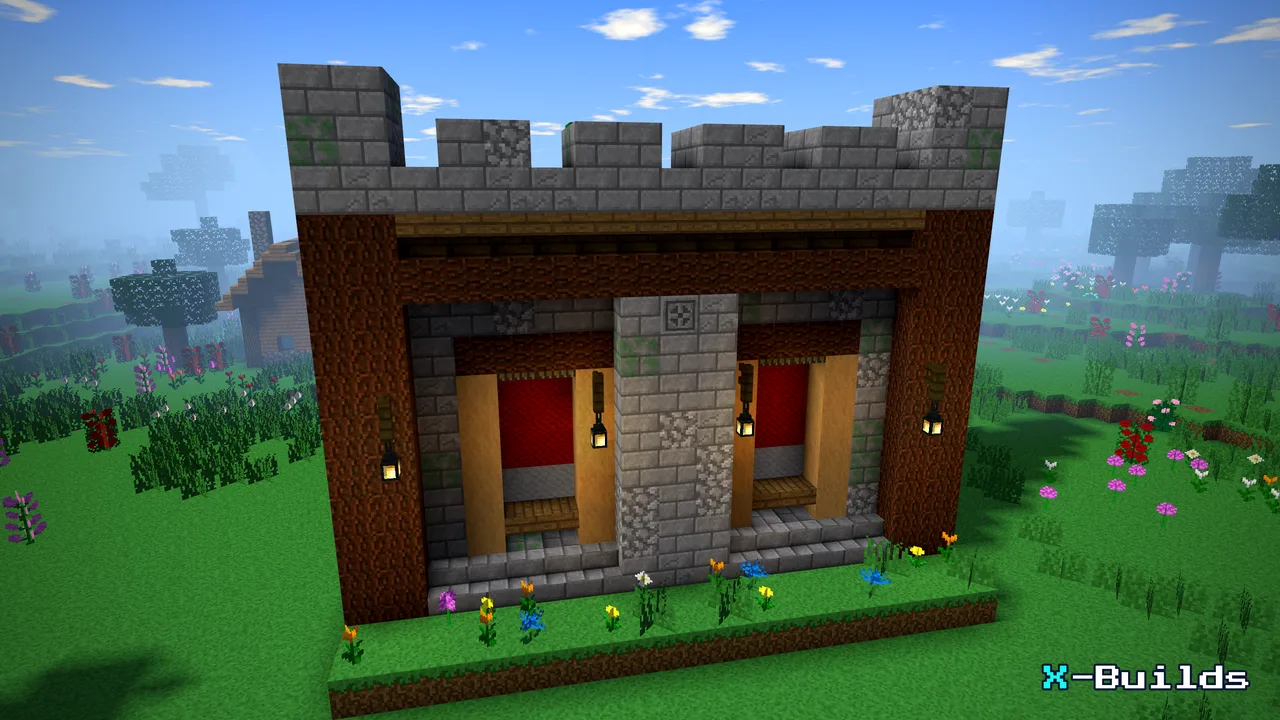
Old stone brick between two thick spruce log posts, with a spruce beam and plank band under a crenellated parapet, a stone pilaster in the middle, two timber-framed niches hung with red cloth and four lanterns on brackets. A courtyard wall, a town wall or a garden wall for a medieval base.
The timber band under the parapet is what makes it read as medieval rather than castle: keep it when you stretch the wall.
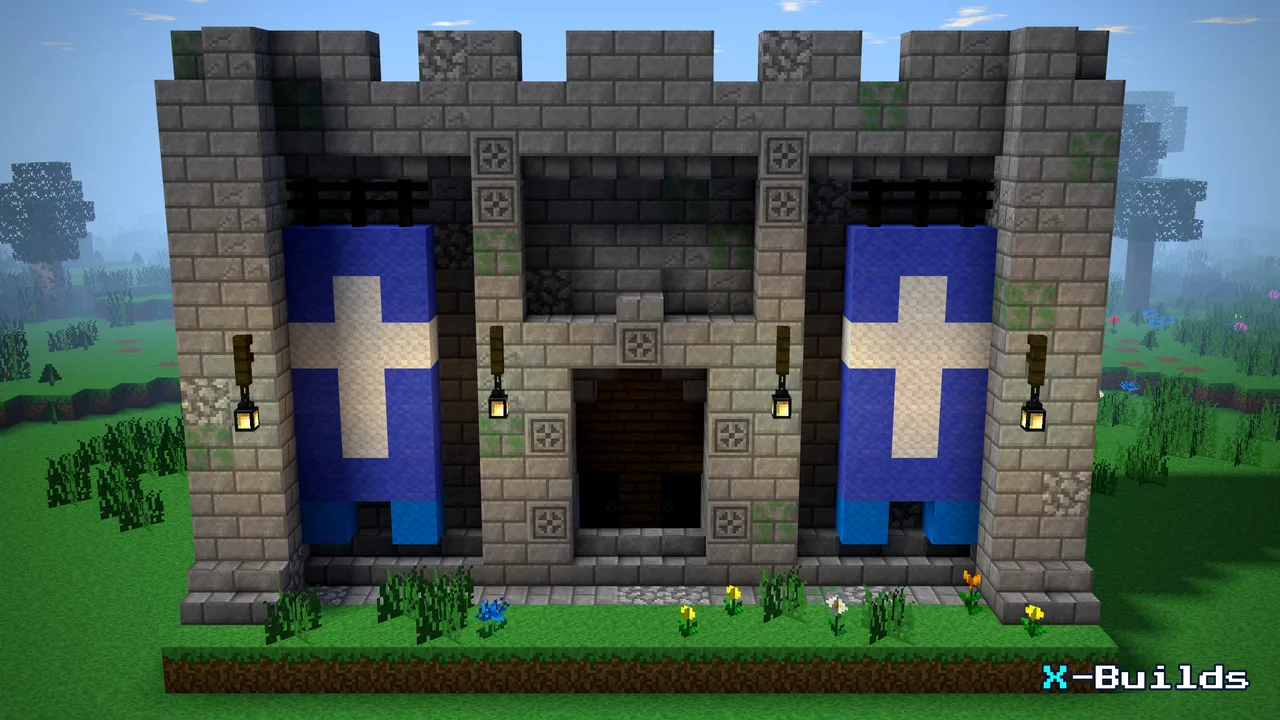
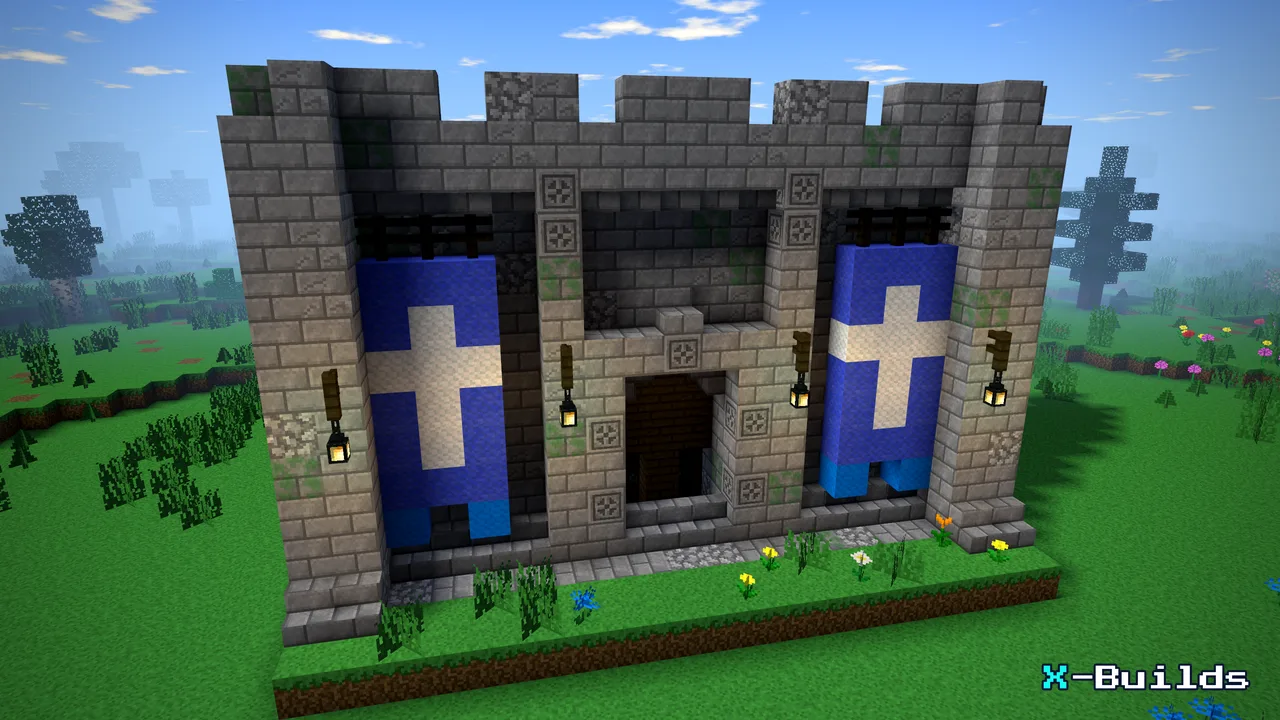
A curtain wall all in old stone brick: corner turrets, buttresses, corbels under a crenellated parapet, an arched doorway with a pair of spruce doors, and two blue banners with a white cross made from wool. Use it as a castle's outer wall, a gatehouse front or a keep's courtyard wall.
Repeat the buttresses, not the turrets: a turret every few sections and buttresses between them is how real curtain walls were built.
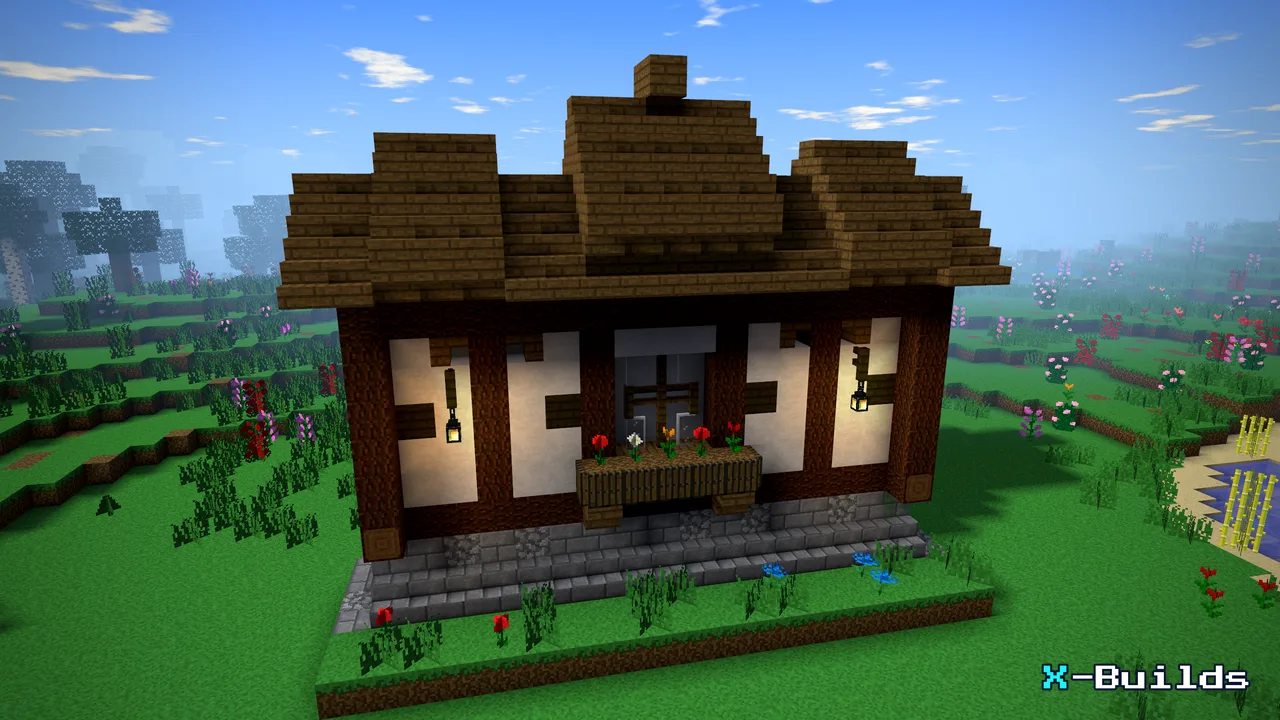
White plaster panels in a dark spruce frame on a stone brick footing, a window with a flower box in the middle, lanterns either side and a stepped spruce cap with three little gables. A garden wall, the front of a village house or a wall between medieval buildings.
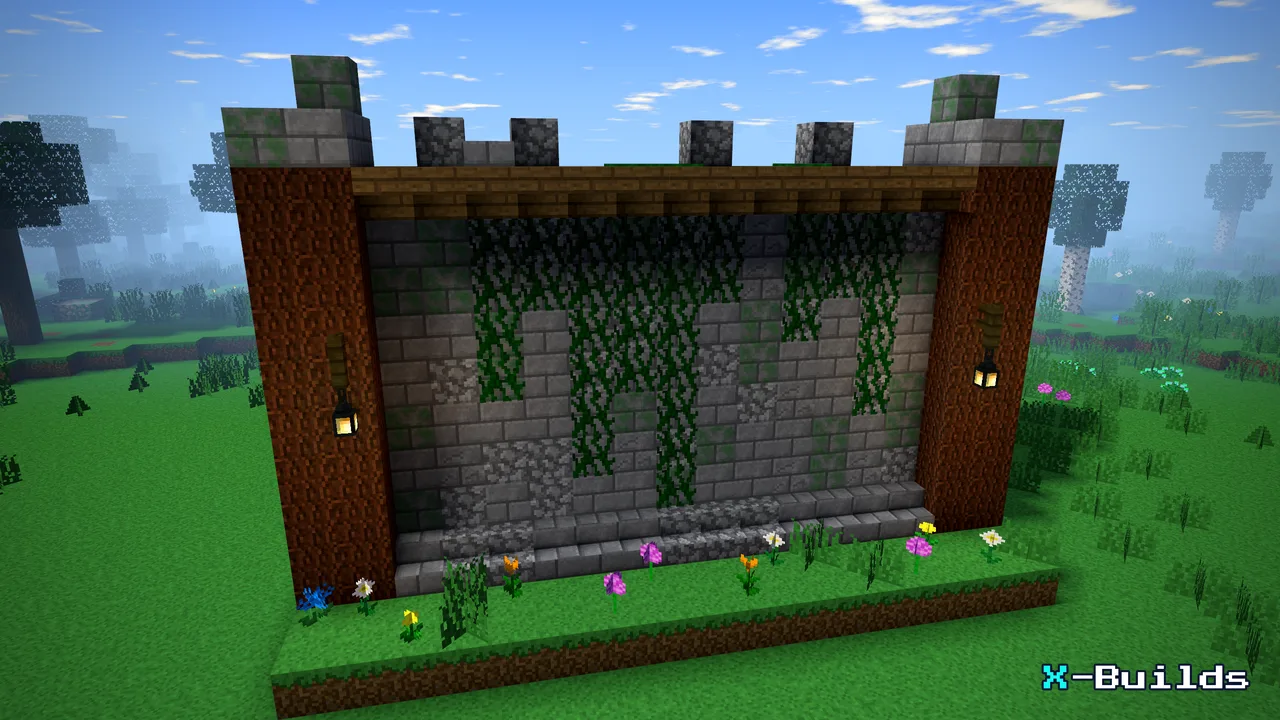
Weathered stone brick and cobblestone between two spruce log posts, with a plank coping, loose stones and moss on top, ivy hanging down its face and a lantern on each post. The simplest wall here, made for a farm, a garden or the edge of a countryside base.
It is the easiest to supply in survival: stone, cobblestone and spruce, with vines from any jungle or swamp.
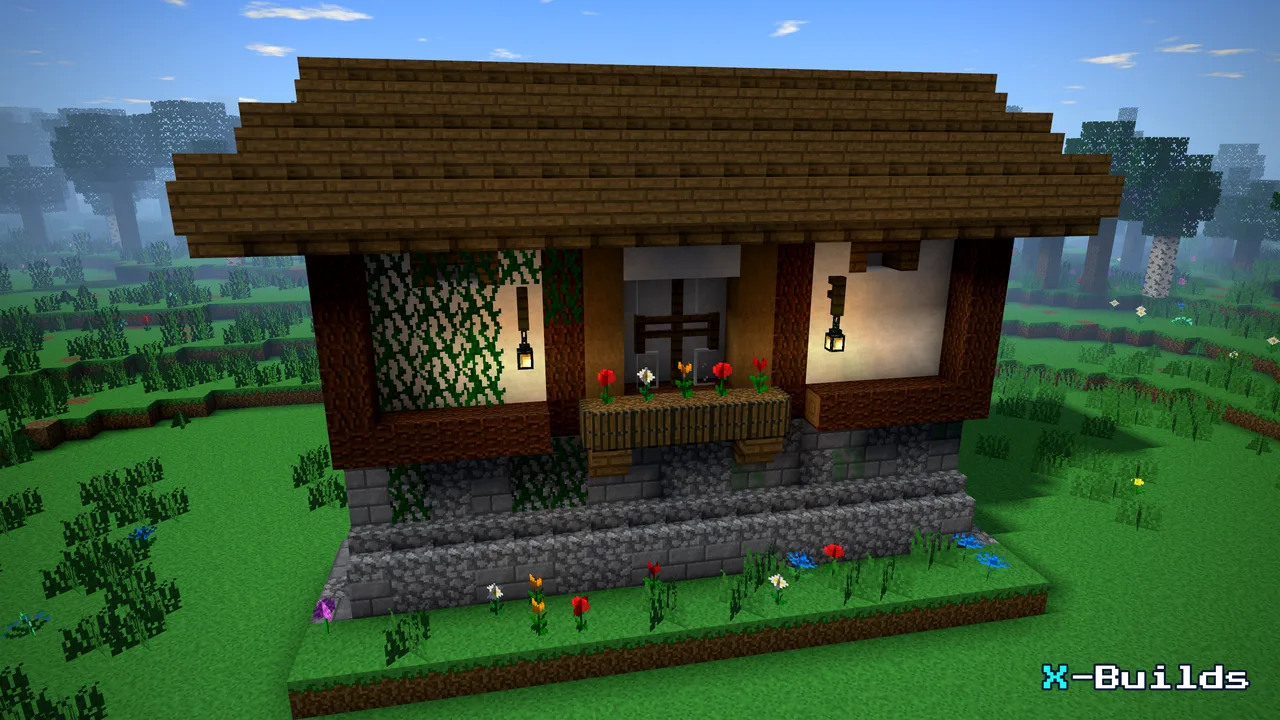
A cobblestone lower half with white plaster panels framed in spruce above, a window with a flower box, ivy climbing one side, lanterns either side of the window and a thick overhanging plank cap. A cottage garden wall, a village street or the front of a cosy countryside house.
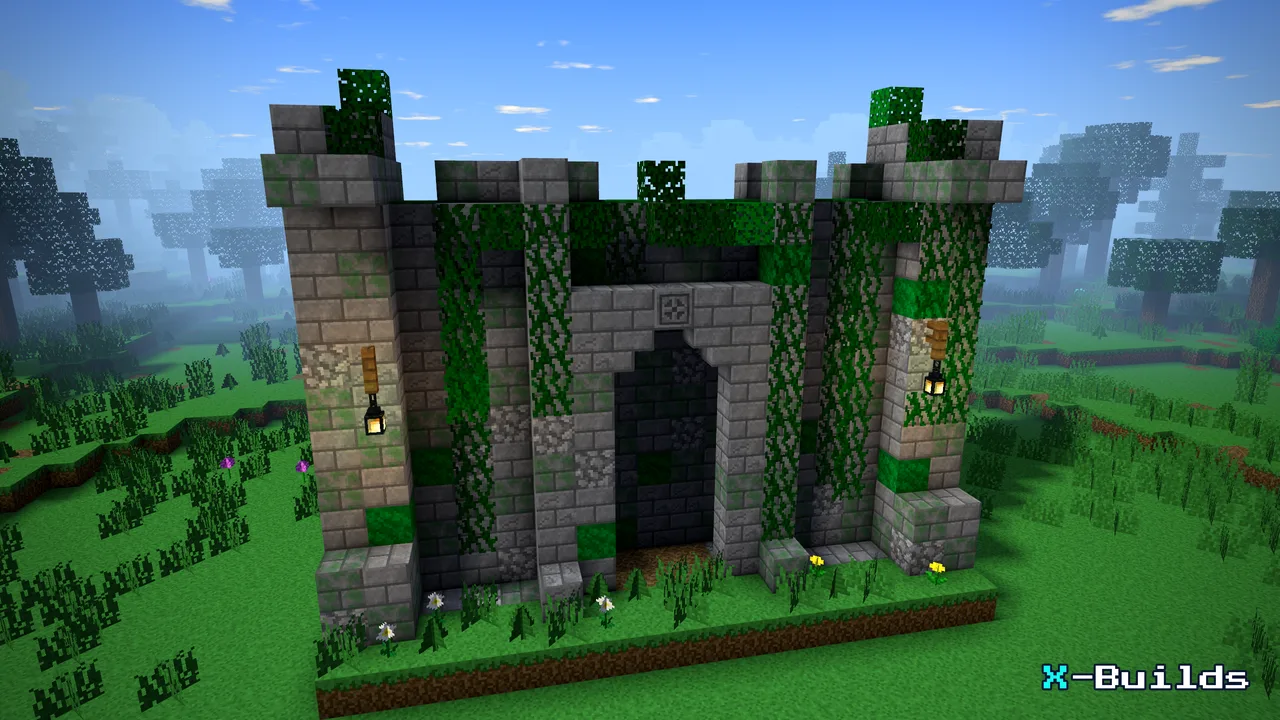
A ruin of mossy and cracked stone brick with stepped pillars and a sealed arched doorway, hung with vines, moss carpets and leaves spilling over the top, with lanterns on the end pillars and ferns at its foot. Ancient ruins, a forgotten temple or the edge of a jungle or forest base.
Overgrowth looks best uneven: let the vines and leaves run further down some bays than others when you repeat it.
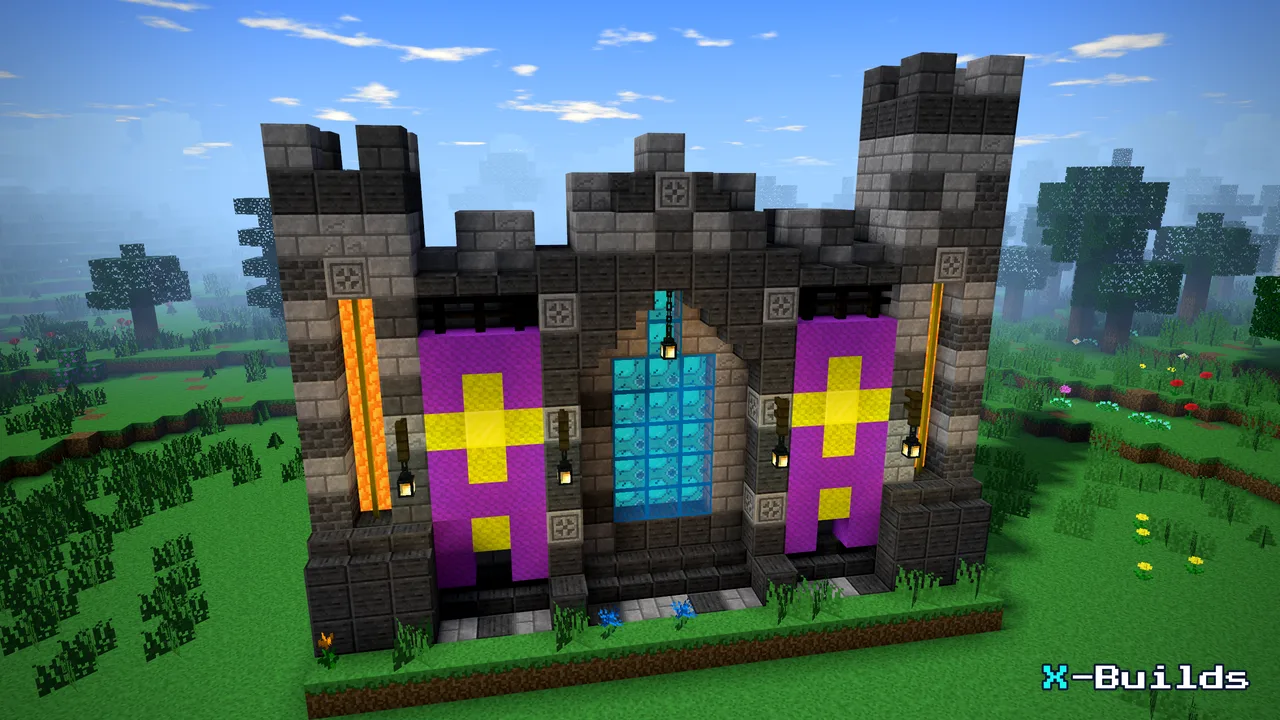
Grey stone and deepslate brick between two towers of different heights, with a pointed arch framing a glowing light blue window, two purple banners with a gold star made from wool, lit slit windows in the towers and lanterns on brackets. A wizard's tower, an elven city or the gate of a fantasy castle.
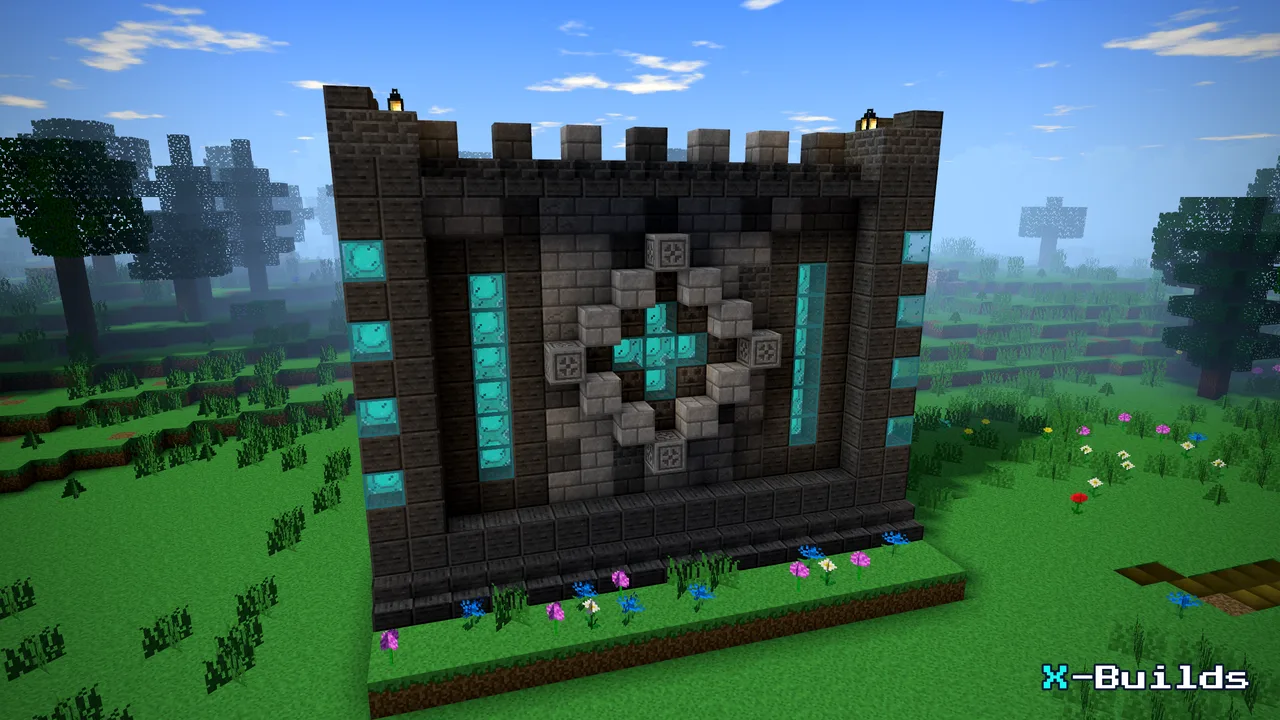
Grey stone and deepslate brick between two polished deepslate pillars, with glowing cyan rune strips made from cyan stained glass over sea lanterns and a diamond medallion with a glowing rune at its heart. A mage's tower, a portal room or a fantasy city wall.
The colour comes from the glass, the light from the sea lantern behind it: swap the glass colour to match your build.
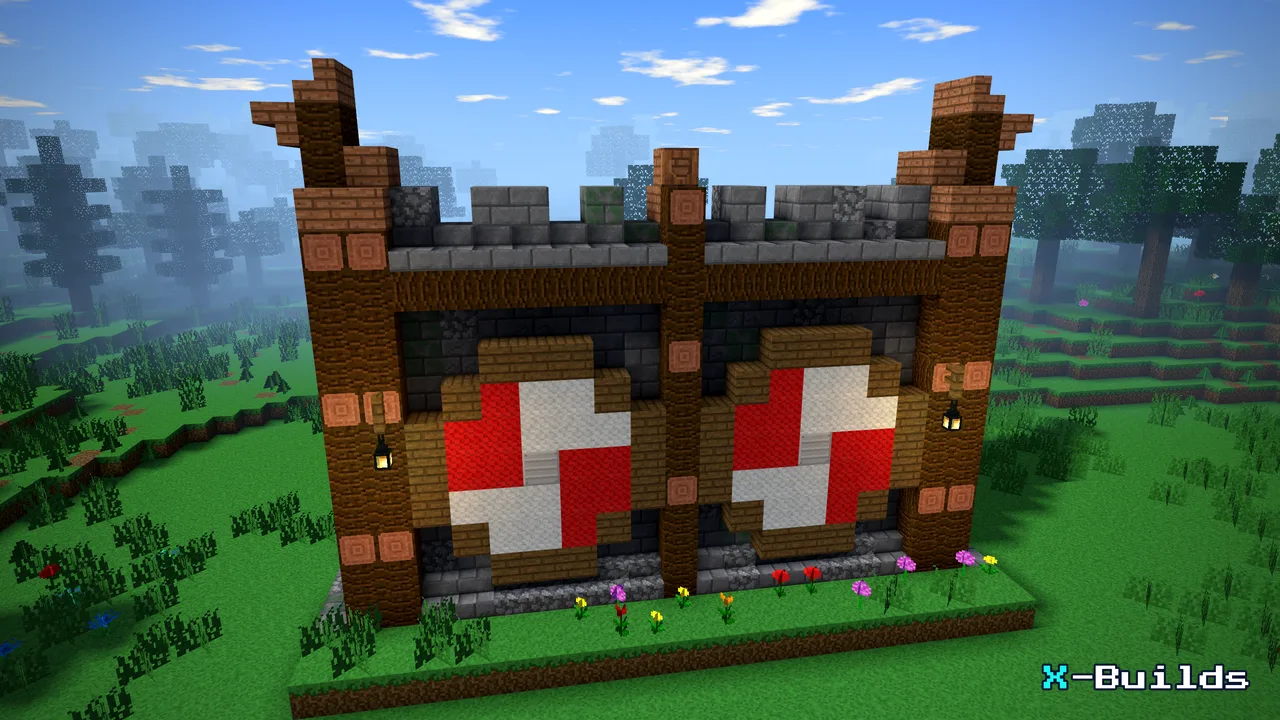
Stone between three carved jungle wood posts, two round red and white shields with iron bosses, a wooden beam under a crenellated stone parapet and dragon-head prows curling out from the corner posts. Build it around a Viking village, a longhouse or a nordic harbour.
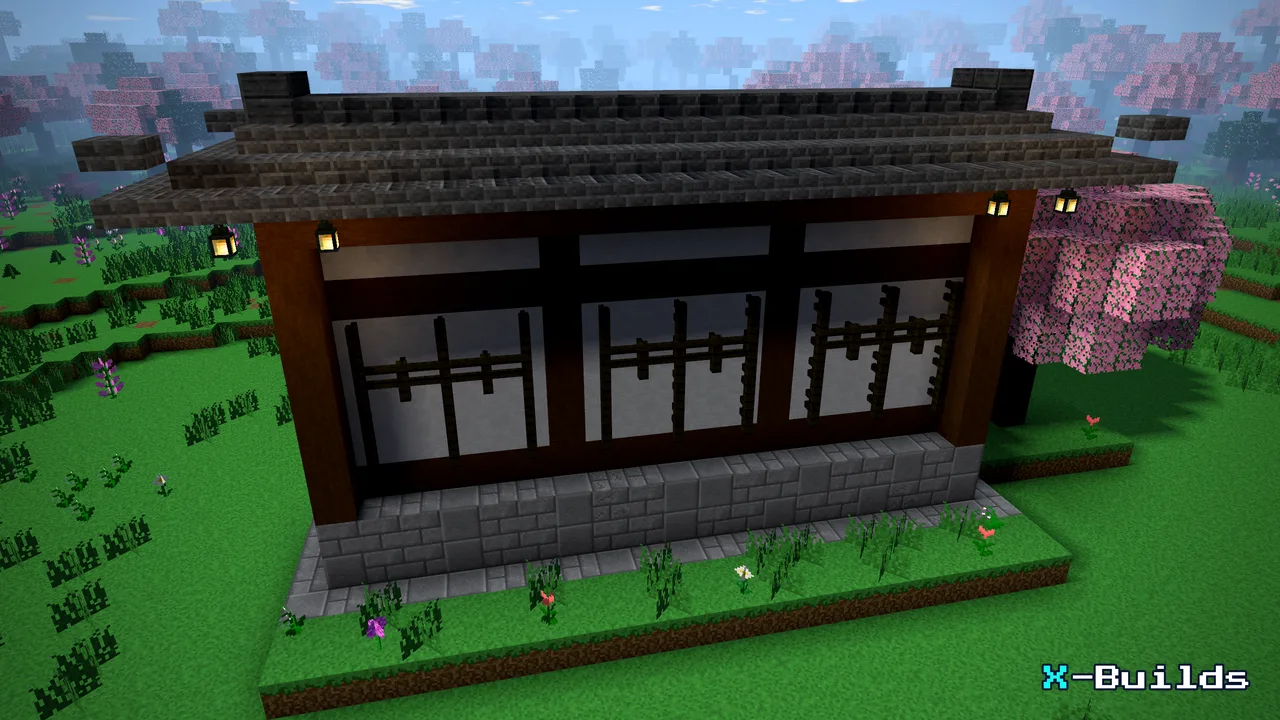
A dark wood frame on a cut stone footing, white plaster with dark oak lattice screens, a low roof of deepslate tile slabs with lifted ridge ends, lanterns hanging from the eaves and a cherry tree beside it. Around a Japanese garden, a shrine or a tea house.
The low slab roof is the Japanese part: keep it shallow and let the ridge ends lift.
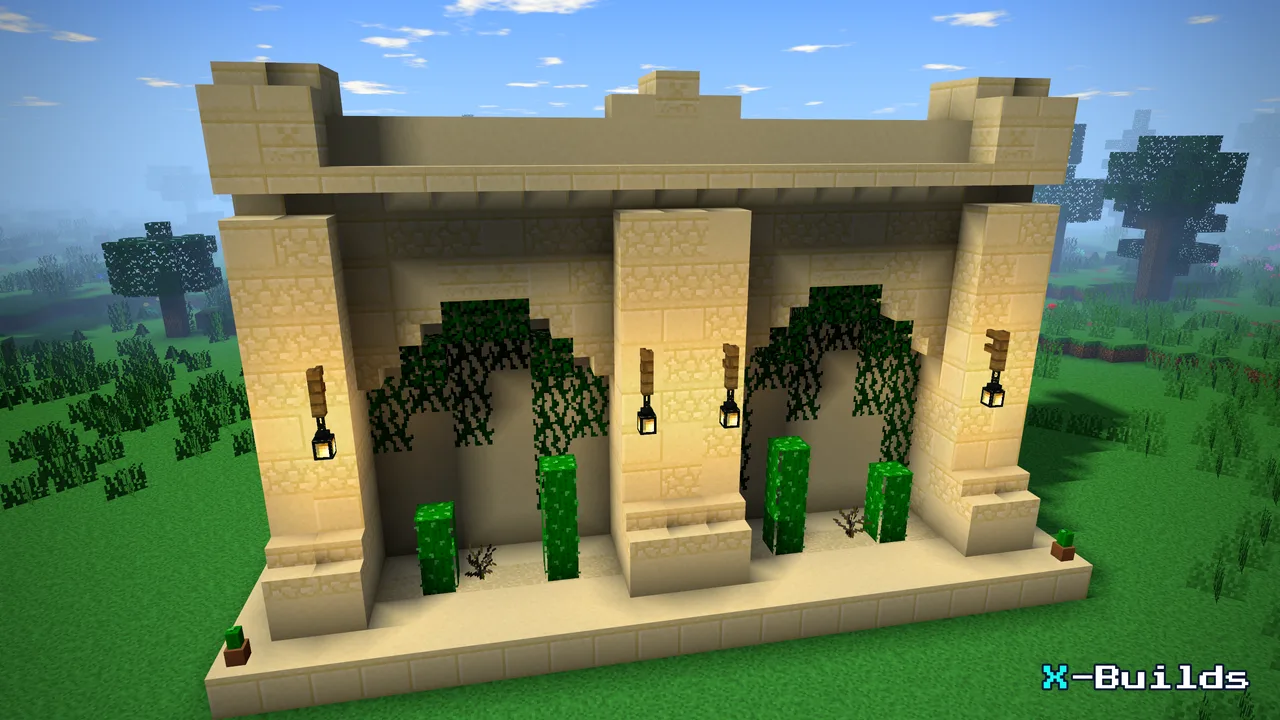
Sandstone, cut sandstone and smooth sandstone in two round-headed arches between three piers, with leaves and vines inside the arches, cacti in front, a cornice and parapet with raised end blocks, chiselled keystones and lanterns on the piers. A desert village, a pyramid courtyard or an oasis.
Cacti break next to solid blocks, so they stand a block out in front on sand, as in the guide.
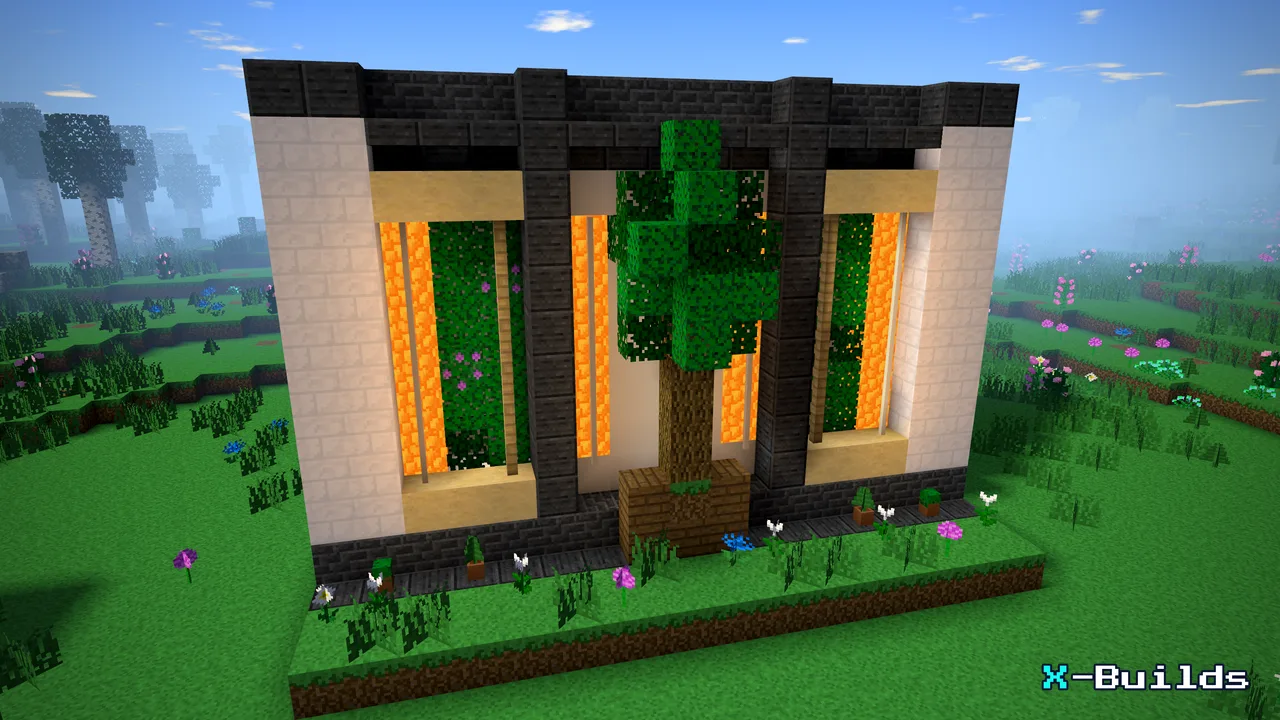
White quartz brick piers and white concrete panels with dark polished deepslate fins and a dark top band, two planted green panels in birch frames, warm light strips made from shroomlight behind glass panes, and a small tree in a planter in the middle. A garden or feature wall for a modern house or villa.
Every build comes with its exact block list and a picture for every step. Free builds open in the free app on your phone, and in your browser on a computer, no account needed.
Pictures and icons: X-Builds; textures REFI by MysticTempest, CC BY-SA 4.0 (credits). Builds are original X-Builds designs; sizes, counts and times come from each build’s guide.